
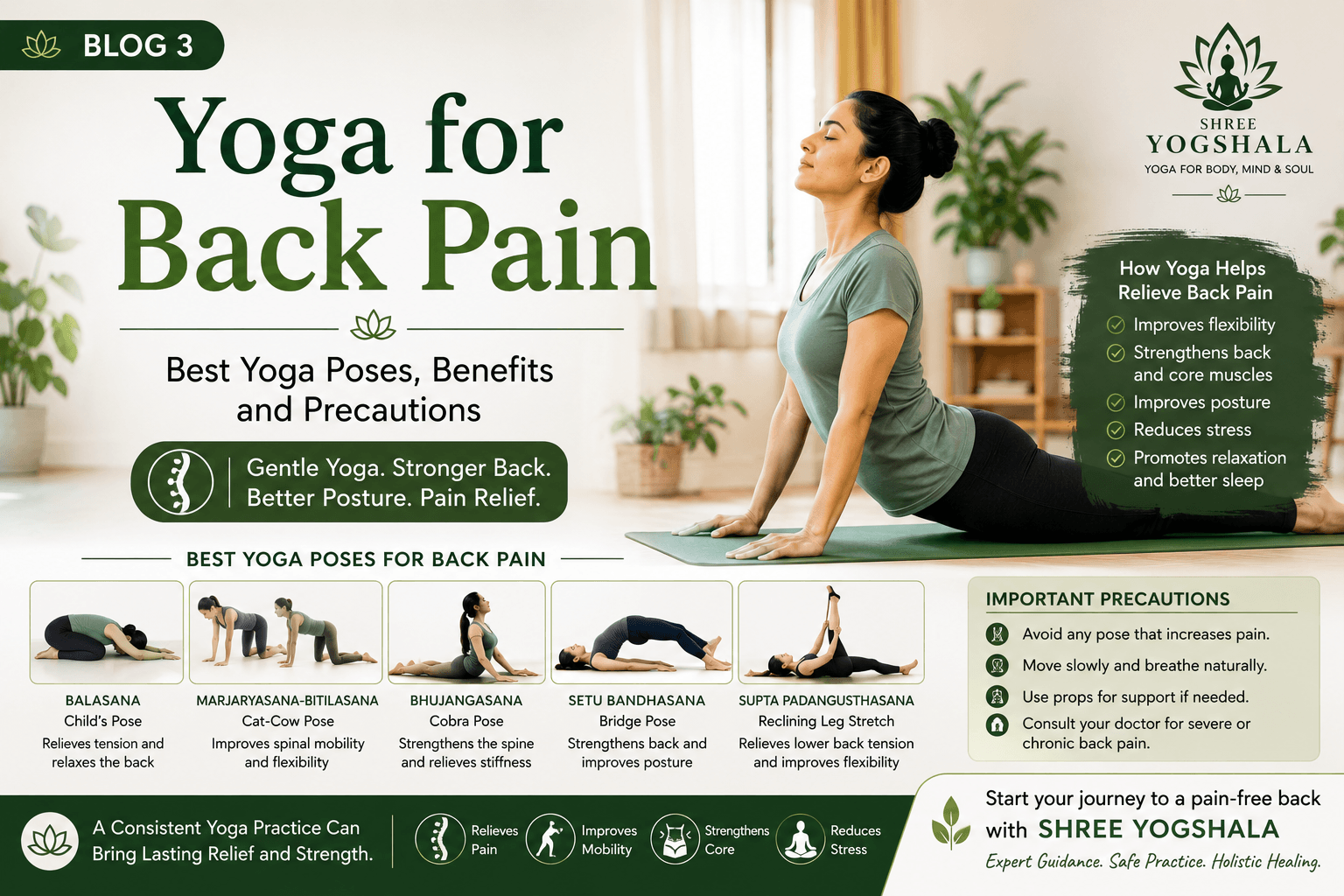
Learn about gentle yoga for back pain, including beginner-friendly yoga poses, mobility exercises, breathing practices, precautions, and when to seek professional advice.
Back discomfort is a common problem that can affect daily movement, work, sleep, and quality of life.
Long periods of sitting, poor movement habits, lack of physical activity, muscle weakness, stress, and other factors may contribute to back discomfort.
Gentle and appropriately modified yoga may help some people improve mobility, strength, body awareness, and relaxation.
Can Yoga Help with Back Pain?
Yoga combines movement, strengthening, stretching, breathing, and relaxation.
Depending on the individual and the cause of discomfort, an appropriate yoga program may support:
- Gentle spinal mobility
- Core and postural awareness
- Hip mobility
- Muscle strength
- Relaxation
- Body awareness
The key is to practice within a comfortable range and avoid forcing painful movements.
Best Yoga Poses for Back Pain
- Makarasana – Crocodile Pose: Lie comfortably on your abdomen and allow the body to relax. This can be used as a gentle relaxation position between movements.
- Balasana – Child’s Pose: Move into a comfortable kneeling position and gently lower the torso. Use a cushion or modify the position if required.
- Marjaryasana-Bitilasana – Cat-Cow: Move slowly between rounding and extending the spine while coordinating movement with breathing.
- Focus: Gentle spinal mobility.
- Bhujangasana – Cobra Pose: From a prone position, gently lift the chest without forcing the lower back. The movement should be controlled and comfortable.
- Setu Bandhasana – Bridge Pose: Bridge Pose can strengthen the hips and posterior chain when performed appropriately.
- Supta Padangusthasana – Reclining Leg Stretch: A gentle reclining leg stretch can be modified with a strap if needed. It can encourage comfortable movement around the hips and back of the legs.
- Sphinx Pose: Sphinx Pose is a gentler variation of back extension for some practitioners. Avoid it if it increases symptoms.
Gentle Yoga Routine for Back Health
A simple session may include:
- Breathing and relaxation
- Cat-Cow
- Child’s Pose
- Gentle hip mobility
- Bridge Pose
- Gentle reclining stretches
- Relaxation
Practice slowly and pay attention to how your body responds.
Yoga for Lower Back Pain at Home
If you are practicing at home:
- Use a comfortable surface.
- Begin with gentle movements.
- Avoid sudden or forceful movements.
- Do not compete with flexibility.
- Stop if symptoms significantly worsen.
- Learn correct technique from a qualified teacher.
When Should You Avoid Yoga?
Do not attempt to self-manage serious or unexplained symptoms through yoga alone.
Seek appropriate medical advice if back pain is severe, persistent, follows significant injury, or is accompanied by symptoms such as significant weakness, numbness, loss of bladder or bowel control, fever, or unexplained weight loss.
Yoga and Posture
Modern lifestyles often involve prolonged sitting and screen use.
Yoga can improve awareness of posture and movement patterns, but there is no single “perfect posture” for everyone.
The goal should be comfortable, varied movement rather than maintaining one rigid position throughout the day.
Frequently Asked Questions (FAQ)
Which yoga is best for back pain?
Gentle, appropriately modified yoga is generally a better starting point than advanced or highly intense practices.
Can I do yoga for lower back pain at home?
Some people can practice gentle movements at home, but professional guidance is recommended when you are unsure about the cause or appropriate exercises.
Can yoga permanently cure back pain?
Yoga should not be presented as a guaranteed cure. Its usefulness depends on the underlying cause and individual circumstances.
Should I stop if a yoga pose causes pain?
Yes. Do not force a painful movement. Modify or stop the posture and seek professional advice when necessary.