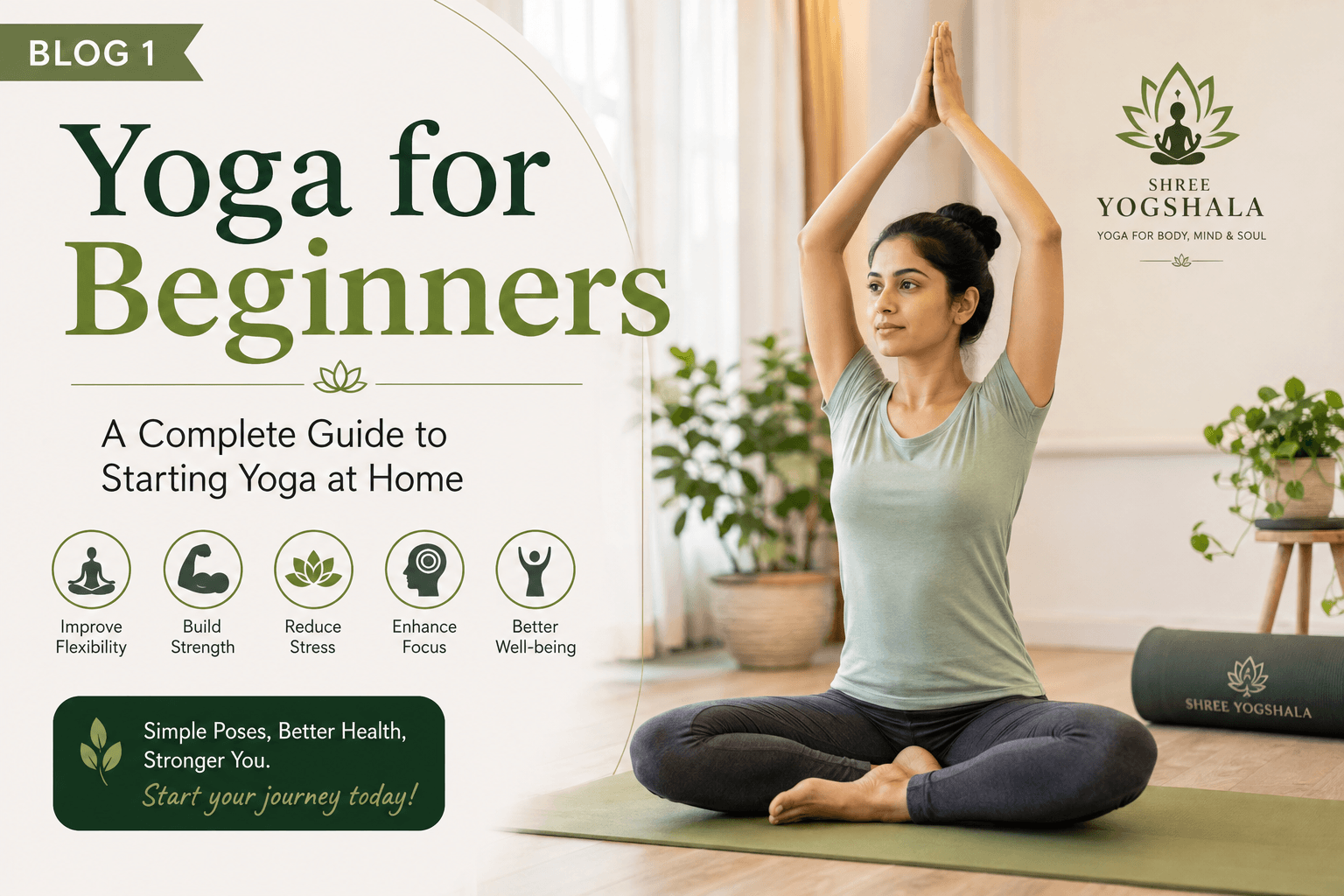
Learn yoga for beginners with this complete guide. Discover beginner-friendly yoga poses, breathing exercises, benefits, precautions, and how to start practicing yoga at home.
Yoga is one of the most effective practices for developing physical strength, flexibility, balance, concentration, and inner calm. If you are completely new to yoga, you may wonder where to begin, which yoga poses are suitable for beginners, how long you should practice, and whether you can practice yoga at home.
The good news is that yoga for beginners does not require advanced flexibility or previous experience. Yoga can be adapted to different ages, fitness levels, and abilities.
With regular and mindful practice, beginners can gradually develop flexibility, strength, body awareness, breathing control, and relaxation.
At Shree Yogshala, we believe that yoga is not simply about performing difficult postures. It is a holistic practice that connects the body, breath, mind, and awareness.
What Is Yoga?
Yoga is a traditional discipline that originated in India and includes physical postures, breathing practices, meditation, relaxation, concentration, and ethical principles.
The word yoga comes from the Sanskrit root “Yuj,” commonly associated with union or integration.
A complete yoga practice may include:
- Yoga asanas
- Pranayama
- Meditation
- Relaxation
- Concentration
- Yogic lifestyle practices
For beginners, the most important goal is not to perform complicated poses but to develop a safe and consistent practice.
Benefits of Yoga for Beginners
Regular yoga practice may help support:
- Flexibility: Gentle yoga postures gradually move the body through different ranges of motion and can help improve flexibility.
- Strength: Many yoga poses require the body to support and control its own weight, helping develop functional strength.
- Balance: Standing and balancing postures improve body awareness and coordination.
- Stress Management: Breathing exercises, relaxation, and meditation can help create a calmer mental state.
- Better Body Awareness: Yoga teaches you to observe your posture, breathing patterns, movement, and physical sensations.
- Improved Concentration: Mindful movement and breathing encourage attention and present-moment awareness.
10 Beginner-Friendly Yoga Poses
- Mountain Pose (Tadasana): Tadasana is a foundational standing posture. Stand comfortably with your feet grounded. Lengthen your spine and relax your shoulders. Keep your breathing natural. Benefits: Helps develop posture and body awareness.
- Child’s Pose (Balasana): Kneel comfortably and gently lower your torso toward the floor. Allow your forehead to rest comfortably if possible. Benefits: Provides a gentle resting position and encourages relaxation.
- Cat-Cow Pose (Marjaryasana-Bitilasana): Move slowly between spinal flexion and extension while coordinating the movement with your breath. Benefits: Encourages gentle spinal mobility.
- Cobra Pose (Bhujangasana): Lie on your abdomen and gently lift your chest while keeping the movement controlled. Benefits: Strengthens and mobilizes the back and may improve awareness of spinal posture.
- Downward-Facing Dog (Adho Mukha Svanasana): From a hands-and-knees position, lift the hips upward while maintaining comfortable alignment. Benefits: Works multiple muscle groups and provides a full-body stretch.
- Tree Pose (Vrikshasana): Stand on one leg and place the other foot in a comfortable position against the standing leg. Benefits: Develops balance, concentration, and stability.
- Bridge Pose (Setu Bandhasana): Lie on your back with your knees bent. Lift your hips gently while keeping the movement controlled. Benefits: Strengthens the posterior chain and encourages hip mobility.
- Butterfly Pose (Baddha Konasana): Sit comfortably and bring the soles of your feet together. Benefits: Encourages mobility around the hips and inner thighs.
- Seated Forward Fold (Paschimottanasana): Sit with your legs extended and gently fold forward without forcing the movement. Benefits: Encourages flexibility of the posterior body.
- Corpse Pose (Shavasana): Lie comfortably on your back and allow the entire body to relax. Benefits: Supports deep relaxation and mindful awareness.
Beginner Yoga Breathing Exercise
A simple starting practice is deep diaphragmatic breathing.
Sit or lie comfortably. Relax the shoulders and breathe slowly through the nose. Allow the abdomen to expand gently during inhalation and soften during exhalation.
Never force the breath.
Beginners can practice for approximately 3–5 minutes before or after their yoga session.
How Long Should Beginners Practice Yoga?
A beginner does not need to practice for one hour immediately.
Start with:
15–20 minutes → 3–4 days per week
Gradually increase the duration as your body becomes comfortable with the practice.
Consistency is more important than doing an extremely long session once a week.
Can Beginners Practice Yoga at Home?
Yes. Beginners can practice many simple yoga poses at home.
However, learning from a qualified yoga teacher can help you understand:
- Correct alignment
- Breathing techniques
- Modifications
- Safety precautions
- Appropriate sequencing
- Meditation and relaxation techniques
If you are completely new to yoga, guided classes can make the learning process easier and safer.
Common Mistakes Beginners Should Avoid
Forcing the Body
Yoga should not be a competition. Avoid pushing aggressively into a posture.
Holding the Breath
Breathing should remain smooth and comfortable.
Comparing Yourself with Others
Everyone has different flexibility, strength, anatomy, and experience.
Practicing Without Rest
Rest and recovery are important parts of a balanced practice.
Learning Only Advanced Poses
A strong foundation is more valuable than immediately attempting advanced postures.
Who Can Practice Yoga?
Yoga can be adapted for many people, including beginners, working professionals, students, older adults, and people looking for a regular wellness routine.
However, people with medical conditions, injuries, pregnancy-related concerns, or significant pain should seek appropriate professional guidance before beginning or modifying their practice.
Frequently Asked Questions (FAQ)
Is yoga difficult for beginners?
No. Yoga can be modified according to your experience, flexibility, strength, and comfort level.
Can I learn yoga at home?
Yes, but beginners often benefit from learning basic alignment and breathing techniques from a qualified teacher.
How many days a week should beginners practice yoga?
Three to four days per week is a practical starting point. You can gradually increase your practice.
What is the best time to practice yoga?
The best time is one that allows you to practice consistently. Many people prefer morning practice, while others find evening practice more convenient.
Can yoga improve flexibility?
Regular, appropriate yoga practice can help improve flexibility and mobility over time.
Start Your Yoga Journey with Shree Yogshala
If you are searching for yoga for beginners, beginner yoga classes, or a structured way to learn yoga, Shree Yogshala can help you build a strong foundation.
Learn yoga step by step under experienced guidance and develop a sustainable practice that goes beyond simply performing yoga poses.